
CRM system for service centers and repair shops
Facts checked: 2026-11-12
A customer calls for the third time today asking if the car is ready. The technician fixing it is standing at the lift with no time to walk over to a computer and answer. The front-desk manager doesn't actually know the status -- only that the work sheet is sitting on the technician's bench. At a service center or repair shop, a work order is never just labor -- it's also parts deducted from stock during the job, not after, and an invoice that has to merge both into one document. When this runs on paper, in a spreadsheet, or in an app separate from the warehouse, the information gets lost exactly when it matters most -- a warranty claim a year later. This page explains how DSOLVER CRM ties reception, parts and invoicing into one process that everyone can see, not just the technician at the lift.
Why a plain sales system falls short here
An invoice isn't one number, it's two merged into one. Labor hours and parts used need to land on the same document, sometimes at different VAT treatment depending on the case. If labor is tracked in one system and parts are deducted in another, assembling the invoice before handing the car back turns into a last-minute scramble.
A part gets deducted during the job, not after. A technician grabs a filter off the shelf and fits it in five minutes -- if the warehouse only finds out that evening, when someone "enters" the day's jobs, another technician can promise a customer a part that's already gone the whole day.
Warranty requires a memory no person actually has. A customer returns after a year saying "you already fixed this part" -- and you need to find, in seconds, exactly when, with which parts, and whether it still falls under warranty. A paper archive or a separate spreadsheet doesn’t help in that moment, it just delays the answer to the customer standing in front of you.
The customer is waiting or calling -- they need an answer now. "Is it ready yet" is a question the front desk hears several times a day for every car in the shop. If status only lives on a paper work sheet on the technician’s bench, answering means walking over and checking yourself -- every single time.
What DSOLVER CRM actually does
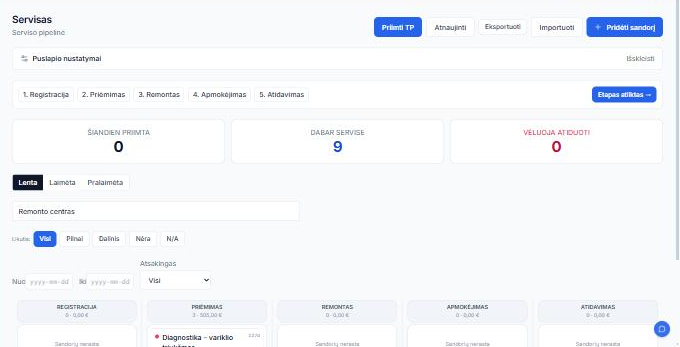
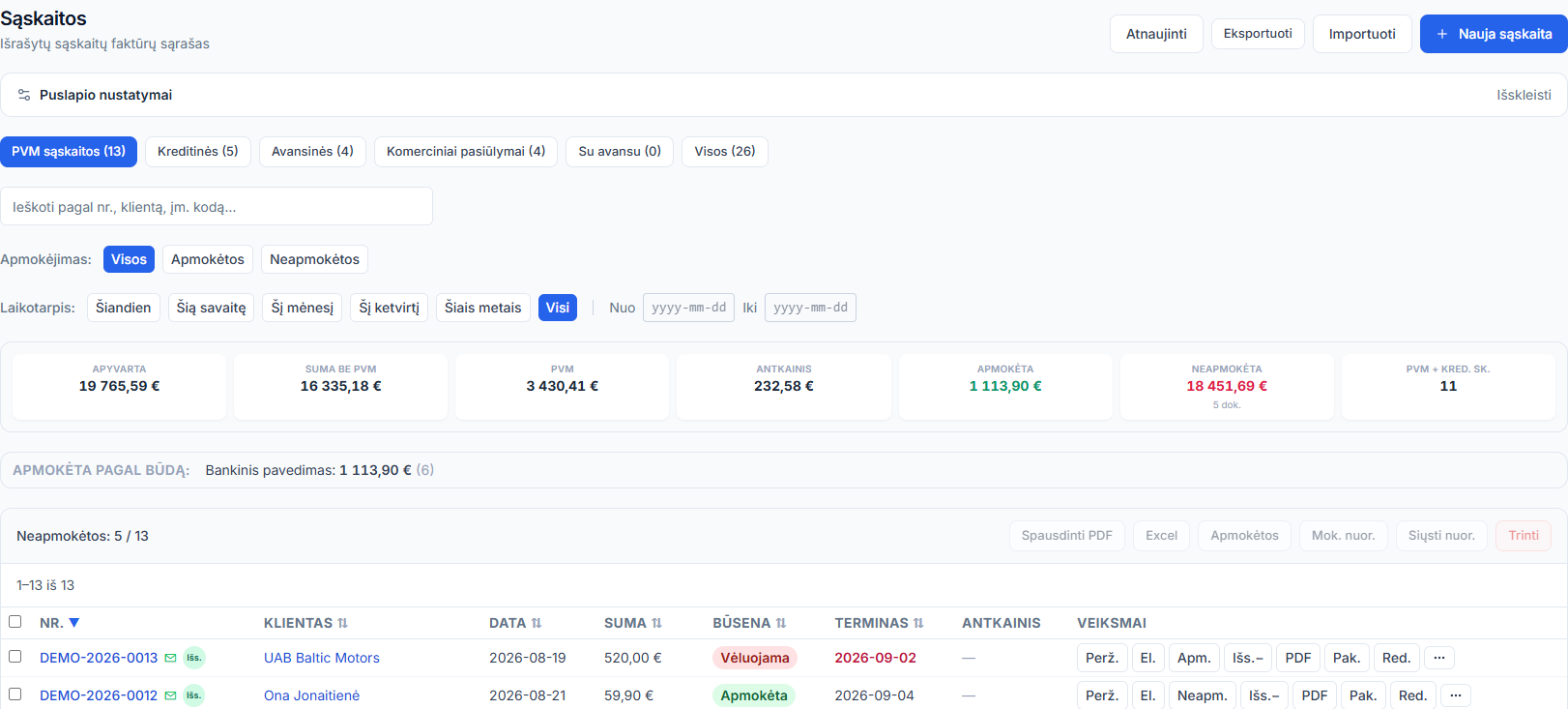
Service reception, parts used and labor time are recorded on one work order card, which generates a VAT invoice directly -- labor and parts merge into one document automatically, with no manual assembly before handover.
Parts used are deducted from stock in real time within the work order itself -- a technician grabs a filter, stock updates that same second, even while several technicians work on different cars at once.
Every customer's past work orders, parts used and dates are visible in one place -- for a warranty case, the answer is found in seconds, not after an archive search.
Work order status (received, diagnosing, in repair, waiting on parts, ready) is visible to the front desk in real time -- answering "is it ready" no longer means walking over to check yourself.
Every work order card shows how many days it's been sitting in its current stage -- a stalled job stands out on its own, instead of someone having to remember which car has been waiting a week for a part.
What this actually changes day to day
- The customer’s invoice is ready the moment the car is handed back -- labor and parts are already merged, no assembling it from two sources
- Several technicians can work at once and stock still matches reality, because every part taken is deducted the instant it happens
- A warranty case’s history is found in seconds -- when it was fixed, with which parts, whether the term still applies
- The front desk answers "is it ready" immediately, without losing time walking over to check with the technician
- Fewer missed or forgotten part write-offs -- every unit used shows up on the invoice automatically, not from memory
- Service and parts/product sales work from the same customer and stock record, not two separate systems
- Need the work order flow fitted to your own shop? Changes happen in days, not months, the way they would on a classic system
Who this is for
- Car, agricultural or construction equipment service shops
- Electronics, appliance or equipment repair workshops
- Businesses combining service work with parts or product sales in the same system

Is this relevant to you: a quick test
If you answer "yes" to at least two of these, an integrated service+warehouse system is worth considering:
- □Are work orders and parts used currently tracked separately from stock?
- □Do you have to manually assemble an invoice for labor and parts from several sources?
- □For a warranty case, is it hard to quickly find when and with which parts a repair was done?
- □Do several technicians work at once, causing stock to frequently not match reality?
Frequently asked questions
Can an invoice be generated directly from a work order?
Yes, the work order card covers both labor and parts used, generating a VAT invoice directly from it.
Are parts deducted from stock automatically?
Yes, parts used are deducted from stock in real time within the work order itself, not as a separate step after the repair.
Can I see a customer's past repair history for warranty cases?
Yes, every customer's past work orders and parts used are visible in one place.
Does it work if I combine service work with parts or product sales?
Yes, the same system covers warehouse and sales management for the same customers and products.
Which plan includes the service features?
Work orders, real-time parts deduction and service reports are part of the Business plan (€349/mo). The B2B self-service partner portal (shown in the screen example) is part of the Enterprise plan (from €699/mo). The first 2 months are free to trial the standard system.
Related pages
Do you run a service center or repair shop?
In a short call, tell us about your reception and parts process -- we'll show you how it would look in your own work.