
CRM system for agricultural and construction machinery and parts trade
Facts checked: 2026-11-12
In the middle of harvest, a farmer calls: the combine's cutting unit has broken, the field is waiting, and every day of downtime means lost crop, not just lost time. You need to know right away whether that exact part is in stock, which combine model it fits, and whether it can go out today. Agricultural or construction machinery trade packs three completely different rhythms into one business -- the machine itself sells rarely and at high value (often on lease or installments), parts sell often and in small amounts, and service work runs on the season, not the calendar. This page explains how DSOLVER CRM ties all three rhythms into one system, so the answer to that farmer is clear in a minute, not after a call to three departments.
Why a generic trading system falls short here
Every machine is a unique object, not a SKU. A tractor carries its own serial number, engine-hour count, and a history of inspections and repairs that builds up over years. If the system only sees it as a "model" rather than a specific, serial-number-tracked unit, after three years nobody can tell which engine has already been replaced and which is still under the manufacturer's warranty.
Seasonality here isn't a gentle wave, it's a cliff. Before sowing in spring and before harvest in autumn, parts demand jumps several times over within a week. If stock for a sprayer nozzle or a combine blade isn't updated in real time, the warehouse hits zero exactly at the peak, even though it showed ten a week earlier.
The same customer, three different relationships. A farm buys a tractor once every five years, with negotiated terms and credit. It buys parts every month in small amounts. And it only orders service work when something breaks. If these three streams live in three separate tools, nobody has the full picture of that customer in one place.
A big deal hides the small ones. One machine sale can run into the tens of thousands of euros and swamp an entire month's parts turnover in a report -- even though it's the parts and service work that bring in the steady, day-to-day cash flow between rare machine sales.
What DSOLVER CRM actually does
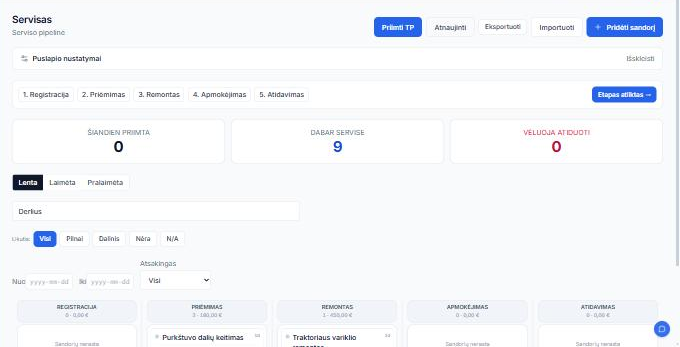
Every machine sold is linked to the customer and to its own VIN or serial number -- all later service, repair and parts-used history builds up on that same record, not a shared list with every other machine.
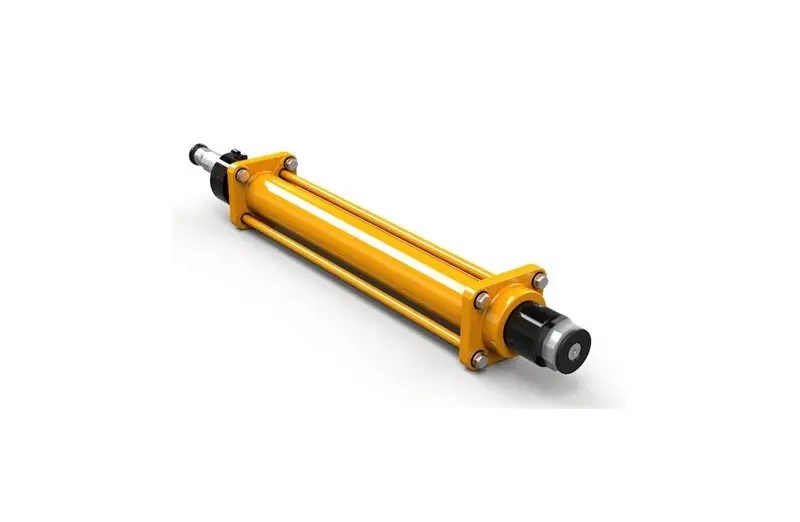
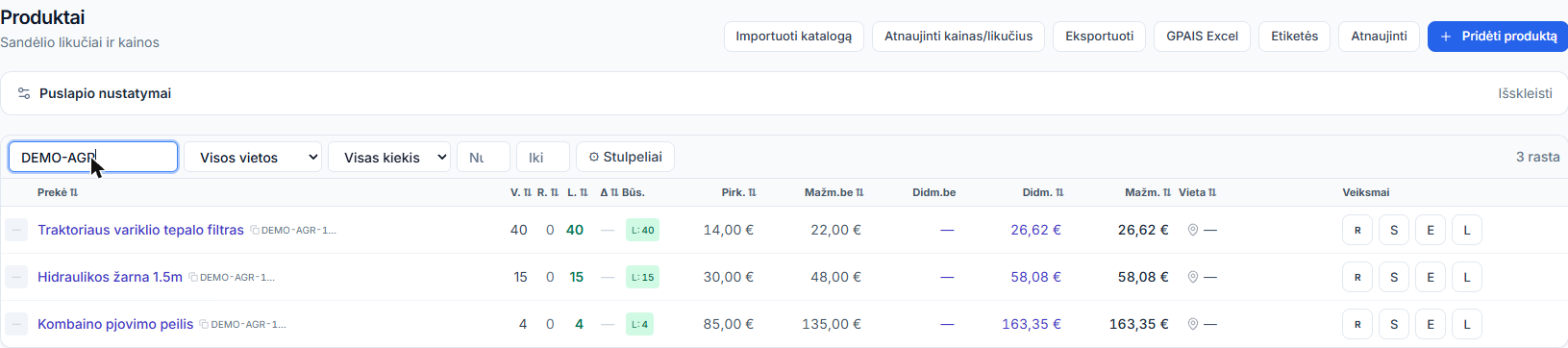
Stock updates in real time on receipt or sale, and a mobile scanner lets you quickly check and recount it before sowing or harvest begins -- while there’s still time to order a missing part, not once the field is already waiting.
Farms and construction companies get individual pricing and a credit limit, visible through the B2B self-service portal -- the partner sees their own price and stock without calling to ask every time.
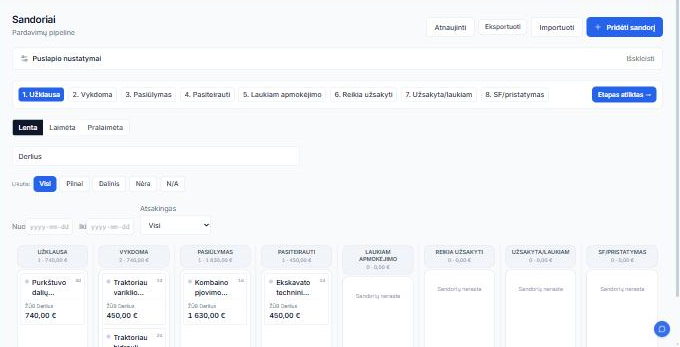
Machine sales, parts and service stay as separate profit centers in your reports -- you see exactly how much the machines themselves earn, and how much comes from the steady parts-and-service flow between the rare big deals.
What this actually changes day to day
- You can tell a farmer or a construction crew within a minute whether the part they need is in stock and fits their exact machine model
- Seasonal parts demand is visible in advance -- fewer stalled jobs exactly when harvest or construction season makes every day expensive
- Each machine’s repair and inspection history is tied to its own VIN or serial number, not a search through a shared list
- A rare, large machine sale no longer drowns out small parts sales in reports -- both streams show up separately and clearly
- A farm or contractor’s price and credit terms apply automatically, with no manual check on every new order
- Sales, parts and service all work from the same customer and machine record, not three separate logs that have to be reconciled by hand
- Need to add a new machine type or fit the system to your seasonal rhythm? Changes happen in days, not months, the way they would on a classic system
Who this is for
- Agricultural machinery and parts retailers
- Construction equipment sellers and rental businesses
- Businesses combining machine sales, service and parts trading in one place
Is this relevant to you: a quick test
If you answer "yes" to at least two of these, an integrated solution is worth considering:
- □Is it currently hard to quickly find the maintenance/repair history of a sold machine?
- □Does stock often not match reality during the seasonal peak?
- □Do you combine machine sales, parts trading and service, but handle them separately?
- □Do B2B customers (farms, construction companies) need individual pricing and a credit limit?
Frequently asked questions
Can I track the repair history of a specific machine unit?
Yes, every machine sold is linked to the customer and its full ongoing service and parts-used history.
Is stock accurate during the seasonal peak?
Yes, stock updates in real time, and a mobile scanner lets you quickly check and recount before the peak season.
Can I apply different prices to B2B customers (farms, construction companies)?
Yes, each B2B customer can be assigned individual pricing and a credit limit, visible through the self-service portal.
Does it work if I combine machine sales, parts and service?
Yes, all three processes are managed in the same system, linked to the same customers and machine units.
Which plan includes the warehouse and B2B portal features?
Real-time warehouse management, mobile scanning and service work are part of the Business plan (€349/mo). The B2B self-service portal for farms and construction companies is part of the Enterprise plan (from €699/mo). Both come with the first 2 months free to trial the standard system.
Related pages
Do you trade agricultural or construction machinery?
In a short call, tell us about your machines, parts and service work -- we'll show you how it would look in your own process.