
When does a business actually need a CRM system
Facts checked: 2026-11-01
Many businesses run on spreadsheets, email and memory for years before they first consider a CRM. It usually isn't one moment but a handful of specific, repeated situations. This article covers the signs that it's time, and when it's genuinely still too early.
Signs that spreadsheets/email are no longer enough
These signs usually build up gradually rather than all at once -- but noticing several of them at the same time is a clear signal:
- Two salespeople call the same customer because neither saw the other's communication history
- A quote or inquiry gets 'lost' in a spreadsheet and the customer goes a week without a reply
- A new hire has no way to see a customer's history when taking over accounts from a former colleague
- A manager can't quickly say how many deals are actually in the pipeline right now or at what stage
- The spreadsheet gets too large, too slow, or multiple versions start to conflict with each other
When a CRM genuinely isn't needed yet
If you're one or two people, have few recurring customers, and a spreadsheet still clearly reflects reality with no confusion, adopting a CRM at this stage just adds administrative overhead with no real benefit. It's worth waiting until at least one of the signs above appears, or the team grows.
What actually changes once you move to a CRM
The core difference is one shared, real-time-updated view for the whole team, instead of a personal spreadsheet or memory:
- Every customer's deals, communication and task history is visible to the whole team, not just one person
- A manager sees the pipeline in real time, not a month-end summary
- Tasks and reminders attach to a specific deal, not a separate list
- A new hire can take over a customer in minutes, without asking colleagues
If you trade physical goods or provide service — an extra signal
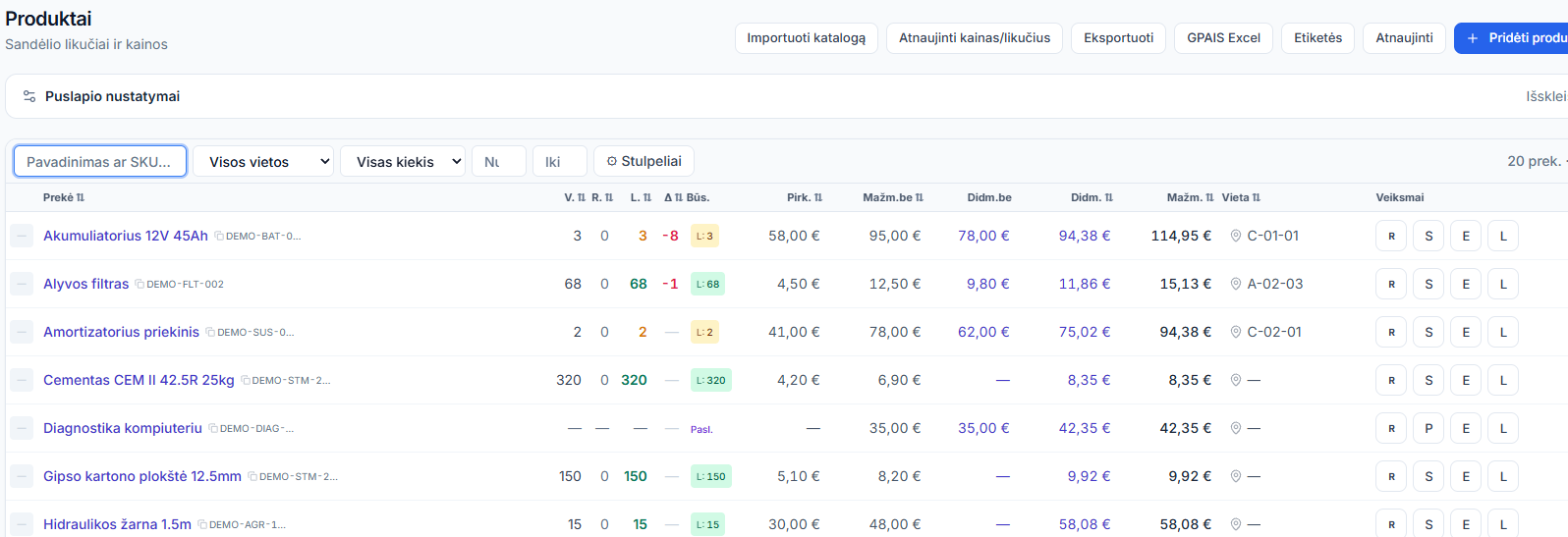
If you also manage warehouse stock or service work alongside sales, the sign list grows: mismatches between what's 'sold' and what's actually in the warehouse, service receptions tracked in a separate log, B2B partners calling about prices and stock. In that case, it's worth looking at a system that covers warehouse and service in one place, not a plain CRM.
A quick test: do you already need a CRM
Check how many of these apply to your business:
- □More than one person communicates with the same customers
- □At least once a month, a quote or inquiry gets "lost" between people or files
- □You can't say within a few minutes how many deals are actually in progress right now
- □Onboarding a new hire into customer history takes more than a day
- □Your spreadsheet has multiple versions or frequently breaks
Frequently asked questions
Does a one-person business need a CRM?
Usually not, if customer volume is small and everything fits in memory or one list. A CRM becomes useful once more than one person handles customer communication.
At what team size do businesses usually start considering a CRM?
There's no fixed number -- team size matters less than whether several people work with the same customers and confusion starts appearing because of it.
Does a CRM take long to roll out?
It depends on data volume and integrations, but a typical DSOLVER CRM rollout project takes from a few days to a few weeks.
Can we try it before deciding?
Yes, the first 2 months let you trial the standard system for free, with no commitment.
What if I also have a warehouse or service work, not just sales?
In that case it's worth choosing a system that covers warehouse and service management in one place alongside CRM, not just contact/deal management.
Related pages
Not sure if it's the right time for your business?
In a short call, tell us about your process -- we'll tell you honestly whether a CRM would actually help at this stage.